From pilot to practice: Scaling the Leaf Color Chart
- September 10, 2026
- 12 minutes read


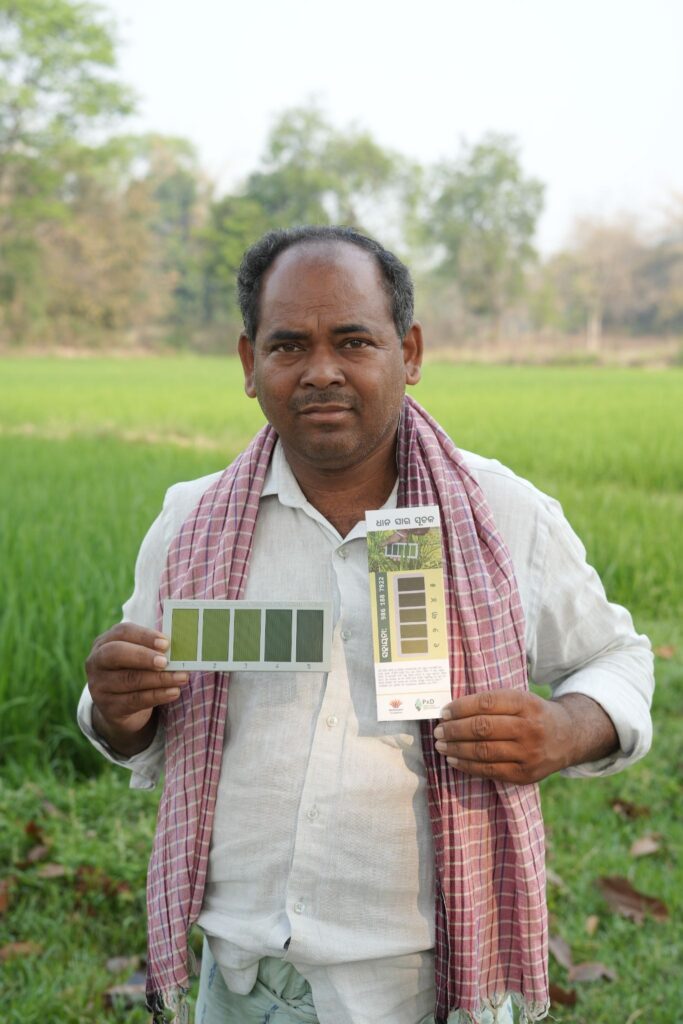
A recurring challenge in scaling agriculture innovations is that the innovation works, evidence supports it, and yet it does not reach the farmers who need it. The bottleneck is often not the technology itself, but the systems surrounding it.
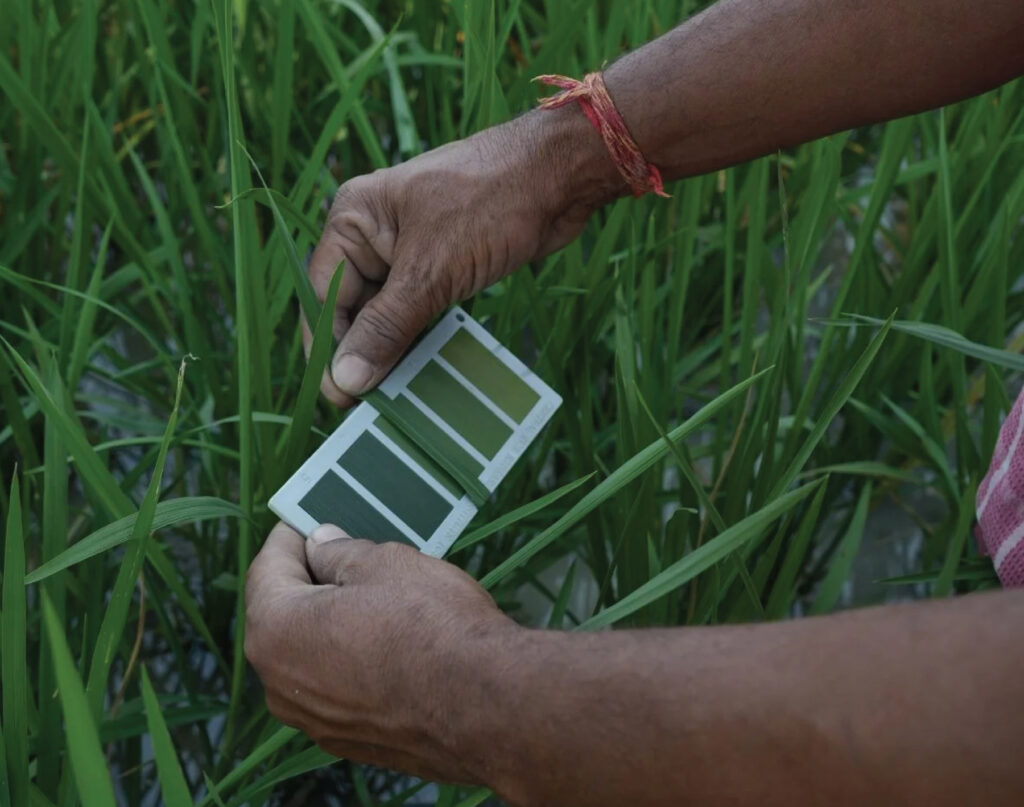
The Leaf Color Chart (LCC) is a case in point. A strip of plastic the size of a bookmark allows a farmer to compare the color of a leaf against a calibrated chart, and determine, in seconds, at zero recurring cost, whether their crop needs more or less nitrogen fertilizer, and by how much. Empirical evidence from real farms in Bangladesh demonstrates that LCC adoption by rice farmers reduced nitrogen use by 8% without compromising yields and, as a consequence, can increase farmers’ profits by reducing their costs (Islam and Beg, 2020). Yet, for most of the farmers who could benefit from it, it remains out of reach.
The environmental case for the Leaf Color Chart
Urea is the most widely used nitrogen fertilizer in India and is a significant source of nitrous oxide (N₂O) emissions in agriculture. When applied in excess, urea breaks down in the soil and releases N₂O, a greenhouse gas approximately 265 times more potent than CO₂ over a 100-year period. LCCs are an evidence-backed tool based on the principles of Site-Specific Nutrient Management (Right Product, Right Rate, Right Time, and Right Place) to optimize resource use (Dreyfus et al., 2024).
In India, the problem is particularly relevant for urea as the government’s 90% subsidization of it potentially prompts farmers to apply more than their crops need. The belief that increased urea application results in greener plants and higher yields is common, and may also contribute to higher than necessary application rates. The LCC addresses this excess by providing a real-time indication of the crop’s nitrogen status, and enabling the farmer to make fertilizer decisions based on field observations rather than an estimation.
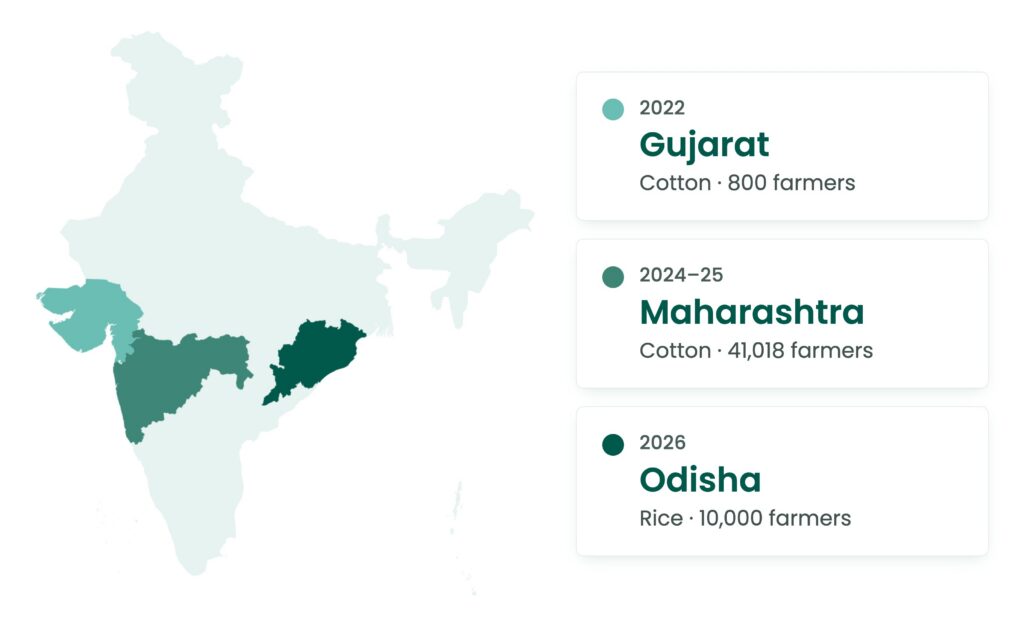
PxD’s LCC initiative (supported by Wellspring Philanthropic Fund, Apparel Impact Institute, Milkywire and WRLD Foundation) set out to test whether and how this tool could be scaled cost-effectively. We began in 2022 with a research pilot with 800 cotton farmers in Gujarat. The insights generated in Gujarat created the foundation for a scaling project in Maharashtra with 40,000 cotton farmers, across 2024 and 2025, followed by a second scaling project with 10,000 rice farmers in Odisha in 2026. Across both scaling contexts, we have randomized roll-out to generate rigorous evidence across multiple contexts on how receiving an LCC with digital user support, alongside variations in financial incentive structures, affects farmers’ decisions about using urea fertilizer, and the associated production costs and greenhouse gas (GHG) emissions.
The three phases have generated hard-won insights into what it actually takes to move a promising innovation from a small-scale pilot to sustained adoption at scale. This blog outlines the PxD team’s LCC-scaling journey across two crops and three states in India, and spotlights the challenges we faced and what we have learned.
The journey of scaling the Leaf Color Chart initiative
Choosing areas of urea overuse
Indications of urea overuse in cotton cultivation made Gujarat an ideal site for pilot research to test whether the LCC could help farmers reduce excess application of urea, lower their input costs, and cut GHG emissions. Preliminary insights from the small pilot were promising and suggested that farmers who received the LCC reported a 35% reduction in nitrogen use, compared to the control farmers. These preliminary findings made scaling up seem worthwhile.
Maharashtra’s Nagpur and Chandrapur districts were a natural choice for scaling up, as their agro-climatic conditions and farmer profiles closely mirrored the Gujarat context. Between 2024 and 2025, we scaled PxD’s LCC initiative to 41,018 cotton farmers in these districts. The experience of LCCs here prompted us to try scaling LCCs for a different crop.
We selected the Bargarh district in Odisha as a second geography, for rice this time. The district is an area with intensive rice monoculture, year-round irrigation, and entrenched urea overuse norms. Outreach with farmers and experts showed that the use of fertilizer was limited in Kharif due to the reduced control of water during the rainfall season, making Rabi the more suitable season for LCC use. We adapted accordingly, using Kharif to test the distribution model with 2,000 farmers and carrying those learnings into the Rabi scale-up to 8,000 farmers, tweaking our approach to improve the quality of intervention at scale.
Building strong local partnerships
In the Gujarat pilot, PxD procured and distributed LCCs directly with our own resources and staff. As we began to think about how to scale, in Maharashtra and Odisha, we needed on-the-ground implementing partners. We identified three criteria for partner selection: existing community trust, an established extension network, and a shared interest in introducing evidence-based tools that support farmers’ decision-making.
In Maharashtra, we established partnerships with two complementary organizations. VANAMATI, the Maharashtra government’s agricultural training institute, gave us institutional credibility and co-funded part of the project. Ambuja Foundation, a local non-governmental organization (NGO) with years of work with Better Cotton Initiative farmers in Nagpur and Chandrapur, brought to the project a depth of field presence, a 300-strong extension team, and the data-collection infrastructure that large-scale field programs require.
In Odisha, we partnered with Mahashakti Foundation, an organization that has worked for two decades on sustainable agriculture in the region and has established relationships with Farmer Producer Organizations and local government agricultural officers. Their institutional knowledge of the region and extensive network enabled us to identify suitable distribution staff and establish clear accountability mechanisms, creating a foundation of mutually aligned goals for the project.
The right partner varies from context to context. In this initiative we partnered with a government institution whose credibility built farmer trust, an established NGO with deep community roots and research infrastructure, and a foundation with direct relationships with farmer organizations and agricultural officers. What matters is that we found partners whose strengths, networks, and motivations aligned with our contextual needs.
Involving farmers for contextual customization of the tool
With our established partners, we worked closely with their networks to gather direct feedback from farmers to inform the customization of the LCC tool. The LCC kit has two components—a plastic panel with shades of green for the farmer to match with the crop’s leaf color, and assess the nitrogen levels in the crop, and a sleeve with instructions on LCC usage and, based on the assessed nitrogen level, recommendations for timely and optimal fertilizer application.
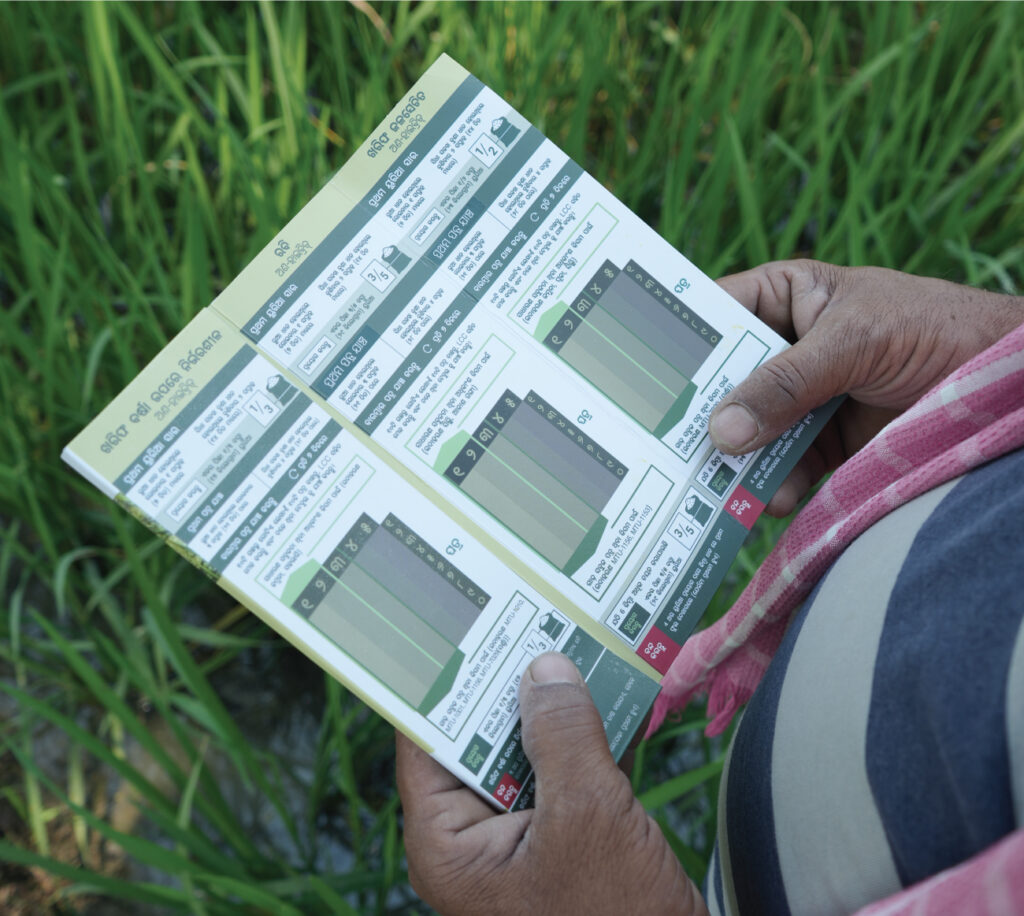
Field testing with farmers in Maharashtra revealed significant contextual and comprehension gaps in the sleeve content. It was designed for the use of straight urea, but we learned that many of these cotton farmers used complex fertilizers. We conducted focus group discussions and field observation sessions in order to redesign the entire sleeve, which we did by simplifying content while retaining agronomic nuances, adding conversion units for complex fertilizer users, and translating the content into local languages. In the second year, we shifted the emphasis from how to optimize urea use to why overuse of urea is harmful; this behavioral reframe proved more effective than technical instruction alone.
In Odisha, the customization challenge was more fundamental than in Maharashtra. This was because the variety of rice types, sowing methods and crop durations made the rice version considerably more complex than the cotton version. We conducted focus group discussions and a structured choice-testing exercise with farmers before redesigning the rice LCC sleeve completely, centering it around what farmers would understand and apply better.
What appeared to be a simple LCC procurement decision turned into an agronomic, behavioral, and design question, one that we answered by drawing on field-based evidence and direct farmer feedback.
Building the capacity of field staff
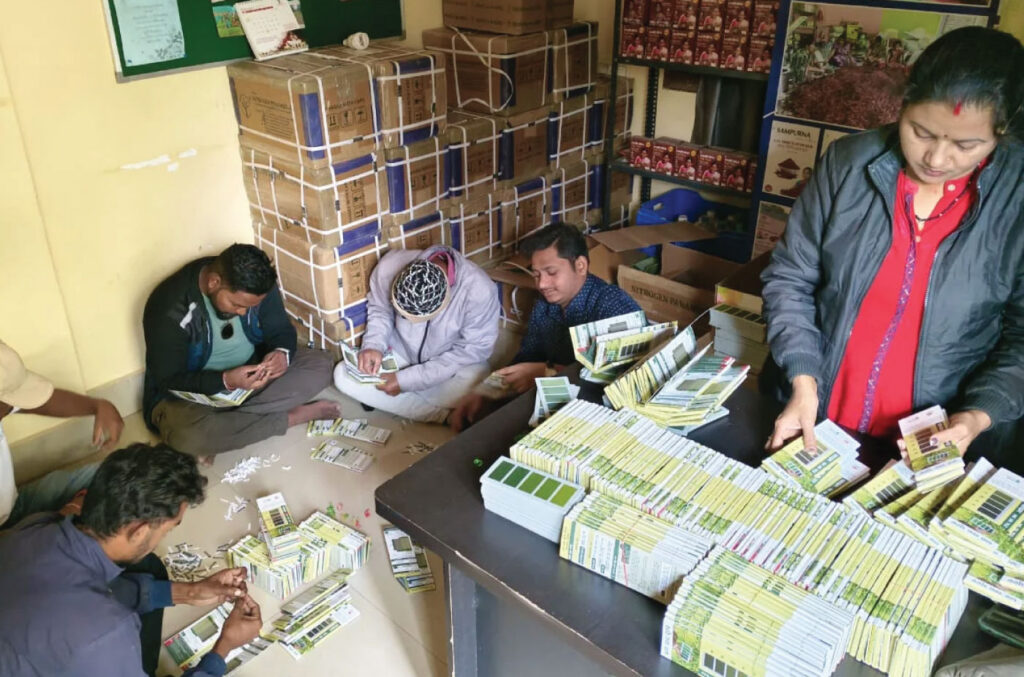
Having engaged partners, and procured and customized the LCC tool, PxD started training the field staff who would train farmers, drawing on the traditional training-the-trainer model. We trained Ambuja Foundation’s 300-strong extension team directly in Maharashtra. A monitored subsample of distribution agents recorded a knowledge score of 89 out of 100, which is a meaningful signal of quality training at scale.
In the early stages of implementation, relatively light-touch monitoring was designed to observe how the program ran with limited intervention. Over time, through field visits, we realized that training built knowledge but early on-ground monitoring was needed to maintain program quality and catch implementation drift before it embeds itself.
Field visits revealed that some extension staff had been using methods that were not in the training protocols; this deviation had emerged independently and was quietly spreading. Catching it early allowed us to correct it before it became standard practice. This experience was an important lesson: training builds knowledge, but on-the-ground monitoring is needed to catch implementation drift before it embeds itself.
In Odisha, we applied this learning directly by following rigorous upfront training protocols with field staff including a system of daily checks with a subset of farmers to confirm that they received the LCC and proper explanations on LCC usage from field staff. We fed the insights that we gained directly into regular feedback sessions for field staff, which improved the effectiveness of the training over the course of the season.
Targeting, mobilizing, and maximizing reach
The LCC is most effective in the hands of farmers who are open to changing their practice. Given our procurement limitations, we chose deliberate targeting of farmers as more cost-effective than blanket distribution to farmers.
In Maharashtra, Ambuja Foundation’s network of around 3,000 farmer Learning Groups provided a ready structure for deliberate targeting. We selected three farmers per group: a lead farmer, typically the most progressive with a higher appetite for trying new approaches, and two additional farmers. This gave local actors meaningful autonomy while keeping selection criteria consistent across the program.
A mid-season observation in Maharashtra changed the economics of the model. The LCC was used only intermittently by individual farmers during the season. Using that insight, we introduced a peer-sharing model in which each recipient shared their LCC with their neighbors; this expanded the access to LCCs by over three times the original distribution reach and reduced the per-farmer cost significantly. Given that rice farmers use the LCC more frequently, individual ownership remained the more practical arrangement in Odisha.
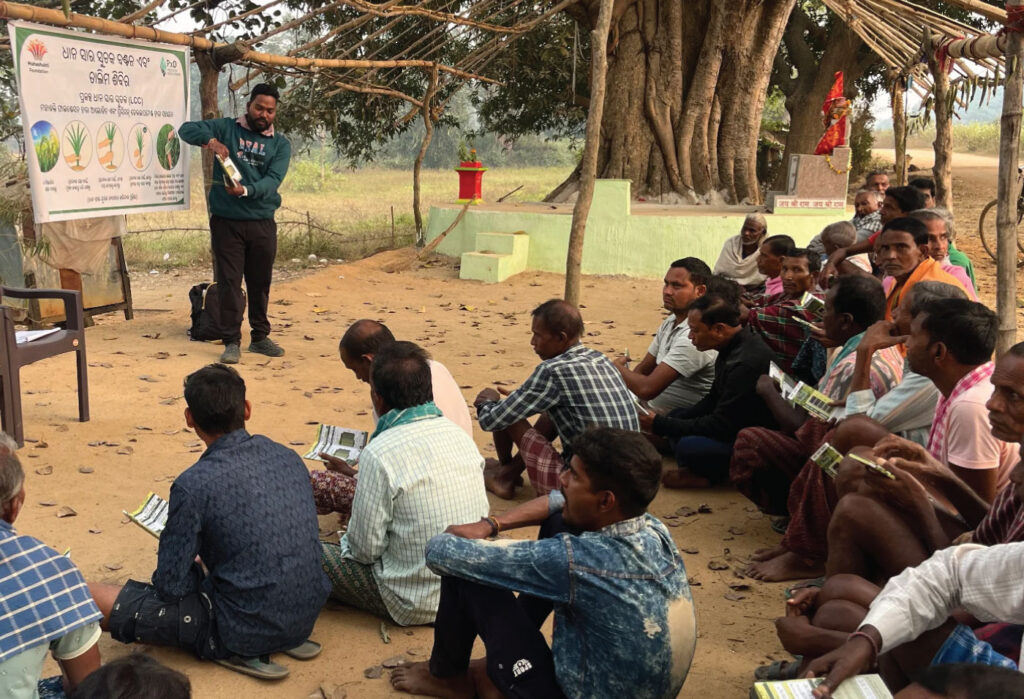
In Odisha, farmer mobilization required a more ground-up approach than was needed in Maharashtra. Field staff began preliminary conversations with progressive farmers and local government officials, and then used door-to-door outreach to identify farmers who were most likely to engage seriously with the LCC tool. Mobilized farmers were brought together in village-level groups of 20 to 25. The visible participation of local government officials added institutional credibility and will be an important point if a case for government-funded LCC programs is made in the future.
Promoting behavior change through digital advisory support
Sustaining LCC use across a full season required more than the tool itself. Drawing on PxD’s extensive experience in designing human-centered digital agricultural advisory, we developed voice-based reminders to support behavior change among farmers throughout the growing season. The phone-call nudges reinforced what farmers had learned in training and reached them at critical crop stages with timely reminders to use the LCC. (Sample audio message in Odisha explaining the process for using the rice Leaf Color Chart.)
Phone call engagement statistics were promising and reflected genuine farmer interest in the LCC intervention. In Maharashtra, the average pick-up rate was 75% and the listening rate was 47% across messages. In Odisha, the pick-up rate was a comparable 65% and the listening rate was 52%, suggesting that farmers found the advice valuable.
Measuring what matters
To assess the program at this scale we collected data that goes beyond reach numbers, including data on farmer access, awareness comprehension and adoption of LCCs, and fertilizer usage. Together, these indicators gave us a comprehensive picture of how our program was working on the ground.
What the data showed
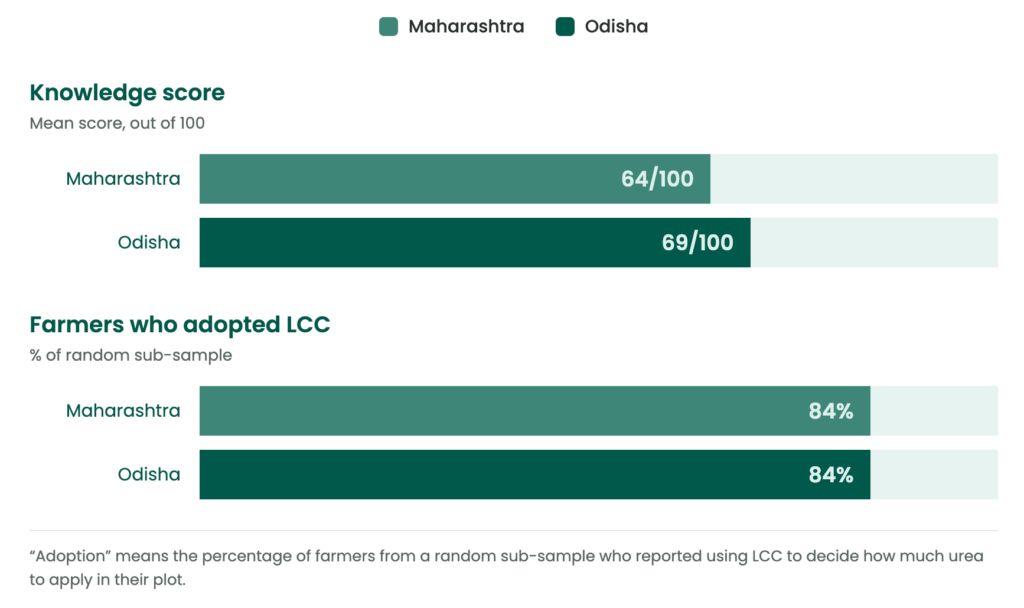
Across both geographies, knowledge and adoption numbers were encouraging. In Maharashtra, 84% of the sampled farmers who were surveyed reported adopting the LCC and received a knowledge score of 64 (out of 100). In Odisha, the adoption rate held steady at 84% while the knowledge score improved to 69 (out of 100), suggesting that the refined training protocols and updated sleeve design in Odisha translated into better farmer understanding from the outset.
The consistency in adoption across two different crops, geographies, and farming systems is a meaningful signal that the delivery model is replicable.
Driving scale
Across the lifecycle of this project, we have learned that the success of our scaling model depends on decisions we made in partner selection, tool customization, capacity building, farmer mobilization, and monitoring. Each decision shapes whether a promising innovation reaches the farmers who need it, and whether use of the innovation is sustained beyond the project period.
For teams working on similar scaling challenges, a few operational lessons stand out:
- Investing time upfront in finding partners whose incentives are structurally aligned with the project goals pays dividends throughout implementation.
- Treating tool customization as a field-based, iterative process with farmers instead of a one-time design decision ensures that the tool becomes relevant and usable.
- Maintaining a presence on the ground during early implementation helps to catch deviations from protocol before they become embedded.
- Staying open to mid-course observations can meaningfully improve both reach and cost-effectiveness.
Scaling is not a straight line from pilot insights to impact at scale. It is a system of interdependent decisions, each of which can either strengthen or undermine the whole process. Scaling effectively requires the same deliberate investment in design, iteration, and learning that goes into developing the intervention itself. Ultimately, every decision we made in our LCC-scaling journey comes back to the same goal: ensuring that a farmer in Maharashtra or Odisha can pick up a simple plastic strip and make an informed decision for their crop, their soil, and their livelihood.
The authors thank Caitlin McKee and Supriya Ramanathan for their valuable inputs and review of this piece.

Stay updated with our newsletter

Make an impact today